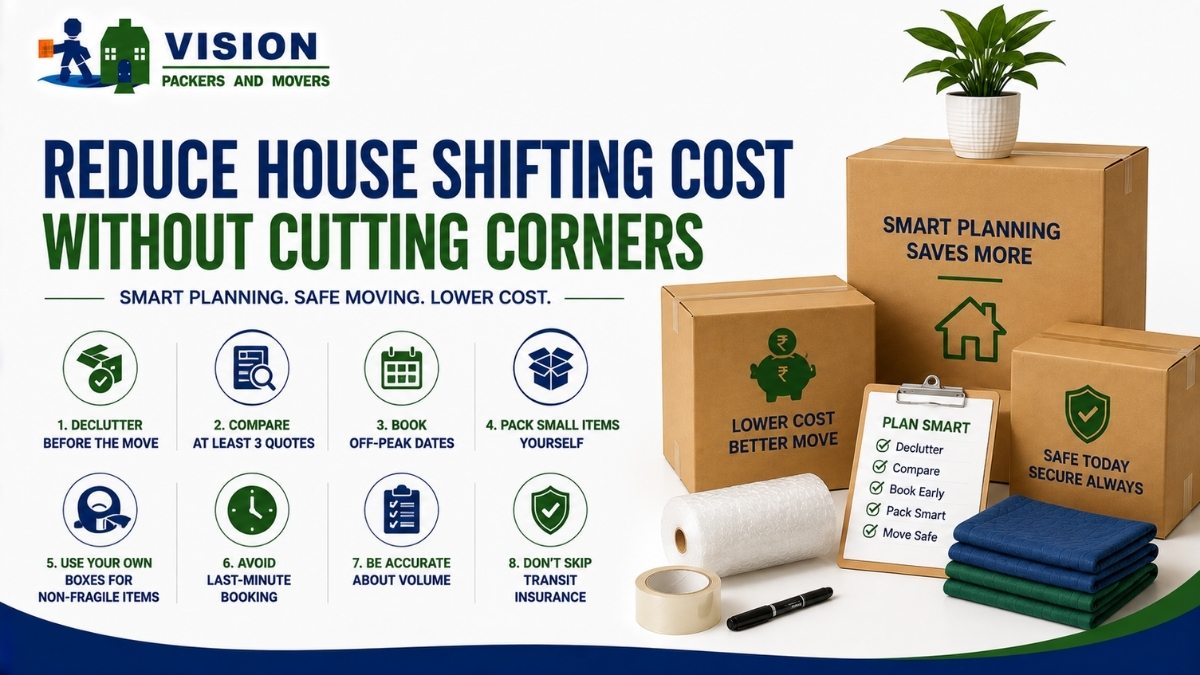
House shifting does not have to be as expensive as the first quote you receive might suggest. Several decisions within your control can bring the final cost down meaningfully — without reducing the care taken with your goods or the professionalism of the team handling your move.
Declutter Before the Move
Fewer items means a smaller vehicle, less packing time, and a lower overall cost. Go through every room before the moving date and set aside anything you have not used in the past year. Donate usable items to a local charity or sell them online. Dispose of anything that is genuinely worn out. The time you spend decluttering before the move directly reduces the cost of the move itself — and you arrive at the new home without carrying unnecessary weight into the next chapter.
Compare at Least Three Quotes
Do not book the first company that gives you a number, and do not automatically choose the cheapest quote. Compare what each quote actually includes — which services, which vehicle size, and whether packing materials and transit insurance are part of the price or charged separately. A quote that appears cheaper may be missing services that a slightly higher quote includes. Always compare quotes on equal terms before making a decision.
Book During Off-Peak Dates
The last five days of any month and weekends are the most expensive times to book a house shift. Demand spikes during these periods because most lease agreements end at the month close and most people prefer to move on a Saturday or Sunday. Moving on a mid-month weekday — a Tuesday or Wednesday between the 10th and 20th of the month — is consistently cheaper and often means a more relaxed and attentive team, since they are not managing multiple moves at the same time.
Pack Smaller Items Yourself
Professional packing is genuinely necessary for fragile items, large furniture, and appliances. It is not necessary for books, clothes, bedsheets, or basic kitchen items that are not breakable. Pack these categories yourself in good quality boxes, sealed properly with packing tape. Ask the company to pack only the items that genuinely require professional handling — mirrors, glassware, electronics, and large furniture pieces. This reduces packing labour time and lowers the total bill without reducing the safety of your fragile goods.
Use Your Own Boxes and Packing Materials for Non-Fragile Items
Boxes from a supermarket, an online delivery, or a stationery shop are perfectly adequate for books, clothes, and soft household items. Strong packing tape and a marker for labelling are all you need alongside the boxes. Using your own materials for the non-fragile portion of the move reduces the materials charge on the final bill, which can be a significant line item on larger house shifts.
Avoid Last-Minute Booking
Booking within two to three days of a desired moving date almost always costs more than booking two to three weeks ahead. Companies charge more for urgency because they have to rearrange existing schedules to accommodate a last-minute request, and the choice of available dates becomes very limited under time pressure. Booking at least two weeks in advance gives you access to better pricing, more choice of moving dates, and a more organised team on the day itself.
Be Accurate About the Volume of Goods
Give the company a precise count of the furniture pieces and the approximate number of packed boxes before they send a quote. When the volume is underestimated, the company may send a vehicle that is too small — which means a second trip at additional cost, or a rushed decision to hire a larger vehicle at short notice at a higher rate. An accurate description from the start means the right vehicle is booked, the price reflects the actual job, and there are no costly adjustments on moving day.
One Clear Note on Transit Insurance
Do not reduce or skip transit insurance to save money on the total cost of the move. The premium is typically a small percentage of the declared value of your goods. If something is damaged during the move without insurance in place, the cost of replacement or repair will far exceed the amount you saved by declining the coverage. Transit insurance is the one line item where reducing cost is not a sound decision.