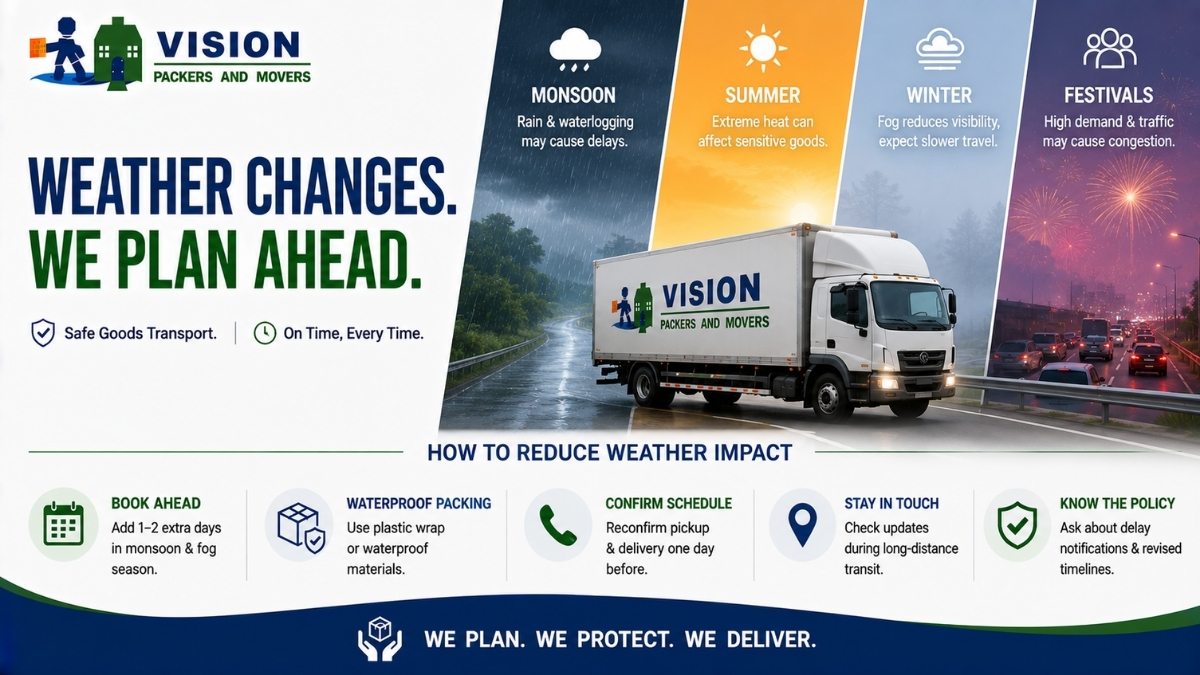
Weather is one of the few factors in goods transport that no one can fully control. Understanding how each season affects road transport in India helps you plan more realistically, pack more appropriately, and communicate better with the transport company handling your consignment.
Monsoon Season (June to September)
Heavy rainfall slows road travel across most of India during the monsoon months. Waterlogging on key arterial routes, reduced visibility, and road surface damage all contribute to longer journey times. Goods transport during this period carries a higher risk of moisture damage if packaging is not waterproof. What to expect: minor delays of a few hours to a day on routes that pass through heavily affected areas, with longer delays possible during intense rainfall events. What to do: use waterproof stretch film or plastic wrapping on all outer surfaces of boxes, choose an enclosed transport vehicle over an open carrier, and confirm the expected delivery window with the company one day before the vehicle is due to arrive.
Summer (March to May)
Extreme heat during the summer months can damage items that are sensitive to temperature — electronics, certain adhesives, candles, plastic items, and some food products. Long-distance routes in peak summer heat also require careful driver management, which some companies handle through relay driving arrangements where drivers change at midpoints rather than completing the full route in one stretch. What to do: inform the transport company if your consignment includes heat-sensitive items so the team can take appropriate precautions during loading and transit. Avoid packing liquids in containers that are not sealed tightly, as heat expansion increases the risk of leakage during transit.
Winter and Foggy Conditions (December to January in North India)
Dense fog reduces highway visibility significantly across northern India during the peak winter months, particularly on routes through Uttar Pradesh, Haryana, Punjab, and Rajasthan. Transport companies operating on these routes typically drive more slowly and build additional buffer time into delivery estimates during this period. What to expect: a day of additional transit time during the peak fog weeks of December and January. This is normal, expected, and not a sign of poor service — it reflects a reasonable and responsible response to genuinely hazardous driving conditions on major highways.
Festivals and Public Holidays
High demand during Diwali, Durga Puja, Eid, and other major festivals means transport vehicles book up earlier than usual and roads carry significantly more personal and commercial traffic. Goods transport during these periods moves more slowly and may take alternative routes to avoid congestion on primary highways. The weeks immediately before and after major festivals are particularly busy. Book your transport well in advance during these periods — ten to fourteen days ahead rather than the usual five to seven — to secure a confirmed vehicle and departure slot before availability closes.
How to Reduce Weather-Related Delays
- Book with additional buffer time during monsoon season and the winter fog period — give yourself one to two extra days beyond the standard transit time before you need the goods at the destination
- Use waterproof packaging for anything that cannot get wet — plastic wrapping over cardboard boxes is inexpensive and takes only a few minutes to apply
- Confirm the pickup and delivery schedule with the transport company one day before each event, particularly during monsoon and fog season when conditions can change quickly
- Stay in contact with the transport team during long-distance moves — a quick message or call at the midpoint of a two-day journey gives you a realistic update on arrival timing
- Ask about the company policy for weather delays before you book — specifically, whether you will be notified proactively if a delay occurs, and what the revised delivery timeline will look like
Good planning and honest, proactive communication with the transport company are the most effective tools available for managing weather-related delays. You cannot control the rain or the fog, but you can control how well you prepare for them before the vehicle departs.