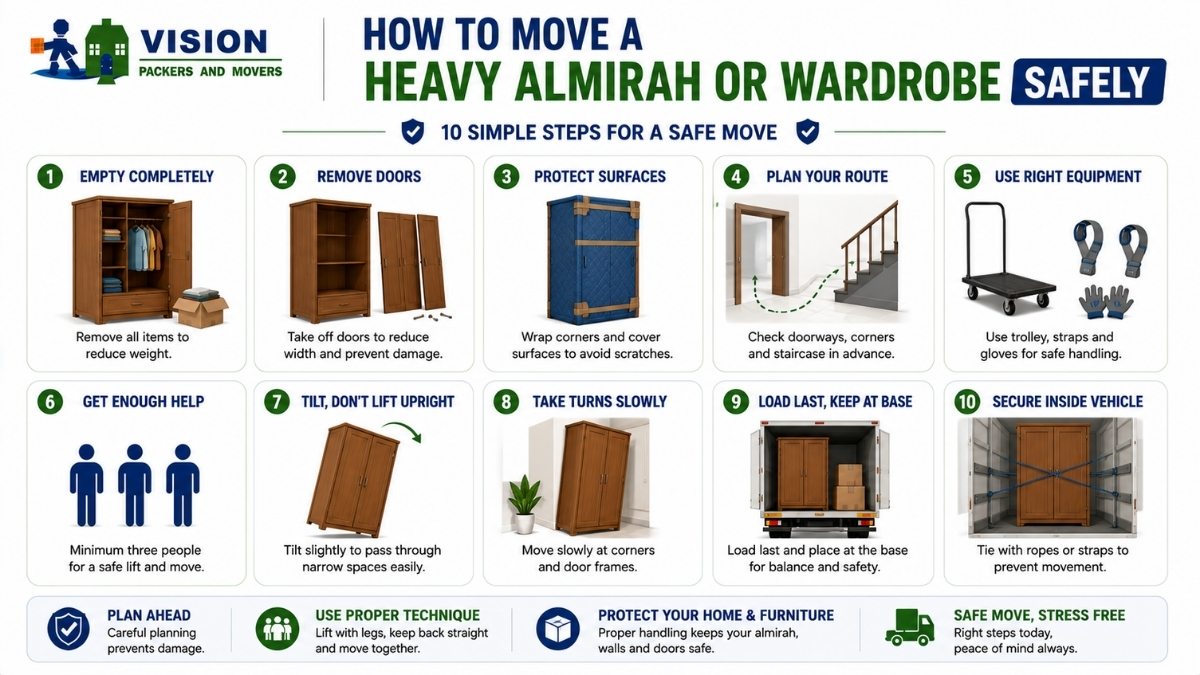
An almirah or large wardrobe is one of the most challenging items to move in any house shift. These pieces are heavy, awkward to grip, and easy to damage — both the furniture itself and the walls and door frames around it. Taking a few minutes to plan before you begin lifting will save significant trouble on the day of the move.
Step 1: Empty the Almirah Completely
Remove every item stored inside — clothes, folded linens, shoes, and anything kept on the internal shelves. Even if the almirah feels sturdy, weight inside it shifts during movement and puts stress on the joints and frame. An empty almirah is also lighter and considerably easier to manoeuvre through narrow doorways and along staircase sections.
Step 2: Remove the Doors If Possible
Most almirahs have doors attached with simple hinge pins that can be removed in a few minutes. Taking them off reduces the overall width of the piece by several centimetres and eliminates the risk of doors swinging open unexpectedly during the carry. Tape the hinge pins to the back of the removed doors so they are not misplaced during the move and can be reattached easily at the destination.
Step 3: Protect the Corners and Surfaces
Wrap all corners and edges in bubble wrap and secure with packing tape. Cover the flat surfaces in corrugated cardboard or moving blankets and fix them in place. This protects the finish of the almirah from scratches and impact marks, and it protects your door frames and walls from damage when the piece is carried through tight spaces inside the home.
Step 4: Plan Your Route Through the Home Before Lifting
Walk the full path from the room where the almirah stands to the transport vehicle before anything is lifted. Note any narrow doorways, tight corners, or staircase sections along the route. Measure the height and width of the almirah and compare them against the narrowest point of the route. Planning the route in advance prevents mid-carry surprises when you are already holding a heavy, awkward load with no easy way to stop and reassess.
Step 5: Gather the Right Equipment
A furniture trolley makes moving an almirah far safer and reduces the risk of injury significantly. Moving straps allow helpers to maintain a secure, even grip without their hands slipping from the surface. Non-slip work gloves protect hands and improve grip throughout the carry. If you do not own this equipment, ask your movers — professional teams carry it as standard for all heavy furniture moves.
Step 6: Get Enough People — Minimum Three
A large almirah or full-size wardrobe requires at least three people to move safely: one at each end and one person guiding through doorways and narrow sections of the route. With fewer helpers, the risk of losing control, dropping the piece, or causing injury to someone in the team increases significantly. Do not attempt to move a large, heavy almirah with only two people regardless of how manageable it looks from the outside.
Safety Warning: Do Not Lift With Your Back. Back injuries from furniture moving can be serious and take a long time to heal. Bend your knees, keep your back straight, and lift with your legs. If the item feels too heavy, stop and get more help before continuing.
Step 7: Tilt the Piece Slightly Rather Than Carrying It Fully Upright
An almirah carried at a slight angle presents a smaller effective height and is easier to pass through doorways and around corners. One helper tilts from the top while another supports and guides from the base. Agree on a count before tilting so every person moves in coordination. Never tilt more than necessary — keep the centre of gravity as low as possible at all times during the carry.
Step 8: Take Corners and Door Frames Slowly — Never Rush
Most damage to furniture and walls happens at corners and door frames when speed causes the piece to strike a surface with force. Slow, deliberate movement at every turn gives the guiding person enough time to adjust the direction of the carry. If the almirah does not clear a frame at one angle, stop completely, reposition the team, and try again at a different angle. Forcing a piece through a gap causes damage every single time.
Step 9: Load Into the Vehicle Last — Heavy Items Sit at the Base
When loading the transport vehicle, place the almirah last so it sits at the base of the load, positioned against the vehicle wall. This keeps the vehicle stable and well balanced during transit and prevents lighter, more fragile items from being crushed under the weight. A heavy piece positioned correctly at the base also reduces the overall shifting of the load during the journey.
Step 10: Secure the Almirah Inside the Vehicle With Ropes or Straps
Once loaded, use ropes or moving straps to tie the almirah firmly to the anchor points inside the transport vehicle. A piece that is not secured will shift and may tip during the journey, damaging both the almirah and other goods around it. Push the piece firmly before the vehicle departs to confirm it does not slide. If it moves at all when pushed, tighten the straps further before setting off.