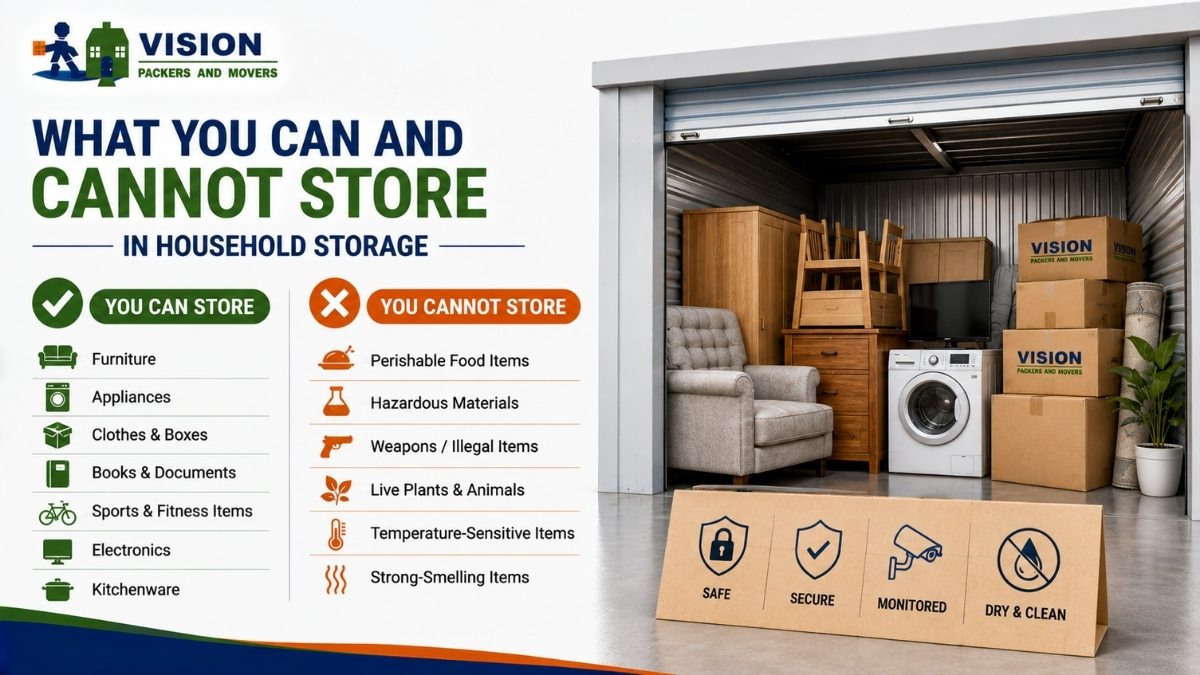
Household storage is a useful solution when you need a safe place for your belongings during a move, renovation, or change in living situation. But not every item is suitable for storage. Before you pack and send your items to a storage facility, it helps to know what is accepted and what is not, so you do not run into any problems on the day.
Items That Are Safe to Store
Most household storage facilities accept the following types of items without any issue:
- Furniture such as sofas, beds, dining tables, chairs, and wardrobes
- Appliances such as washing machines, air conditioners, and microwaves (cleaned and empty before storage)
- Boxes of clothes, linens, and seasonal items such as winter blankets or festival decorations
- Books, files, and documents (packed in sealed, dry boxes)
- Sports equipment, bicycles, and exercise machines
- Electronic items such as televisions, computers, and music systems (packed properly)
- Kitchenware such as crockery, pots, and utensils (cleaned and boxed)
Items That Are Usually Not Accepted
The following items are generally not allowed inside storage units for safety or legal reasons:
- Perishable food items: Fresh or cooked food, groceries, or anything that spoils quickly attracts pests and creates hygiene problems in the facility.
- Hazardous materials: Petrol, paint, aerosol cans, gas cylinders, fireworks, and chemicals are not permitted in most storage facilities due to fire risk.
- Weapons or illegal items: Firearms, ammunition, and any item that is illegal to possess are not accepted under any circumstances.
- Live plants and animals: Plants need light and water and cannot survive in a closed storage unit. Animals must never be kept in storage.
- Temperature-sensitive medicines and equipment: Items that require refrigeration or specific temperature conditions cannot be stored in a standard unit.
- Strong-smelling items: Items with a strong odour can affect other units in the same facility or attract pests, so these are generally not accepted.
Items to Be Careful About
Some items are technically allowed but need special attention before going into long-term storage:
- Refrigerators and washing machines: Both must be completely cleaned, dried, and emptied before storage. Residual moisture causes mould and bad odours inside the unit and the appliance itself.
- Leather furniture: Leather needs proper covering to avoid drying out or cracking in storage. Wrap it in breathable fabric, not plastic sheeting.
- Wooden furniture: Wood can absorb moisture and warp over time. Ask the storage provider if the unit is humidity-controlled before storing valuable wooden pieces.
- Valuables and important documents: Jewellery, cash, and original documents such as property papers and passports are better kept with you personally rather than in a storage unit.
Always Confirm With Your Storage Provider
Different storage facilities have different rules. Some accept items that others do not. Before you book a storage unit, share a list of everything you want to store with the provider. This gives them a chance to flag anything that may be a problem and saves you from an unpleasant surprise on the day you arrive to drop off your items.