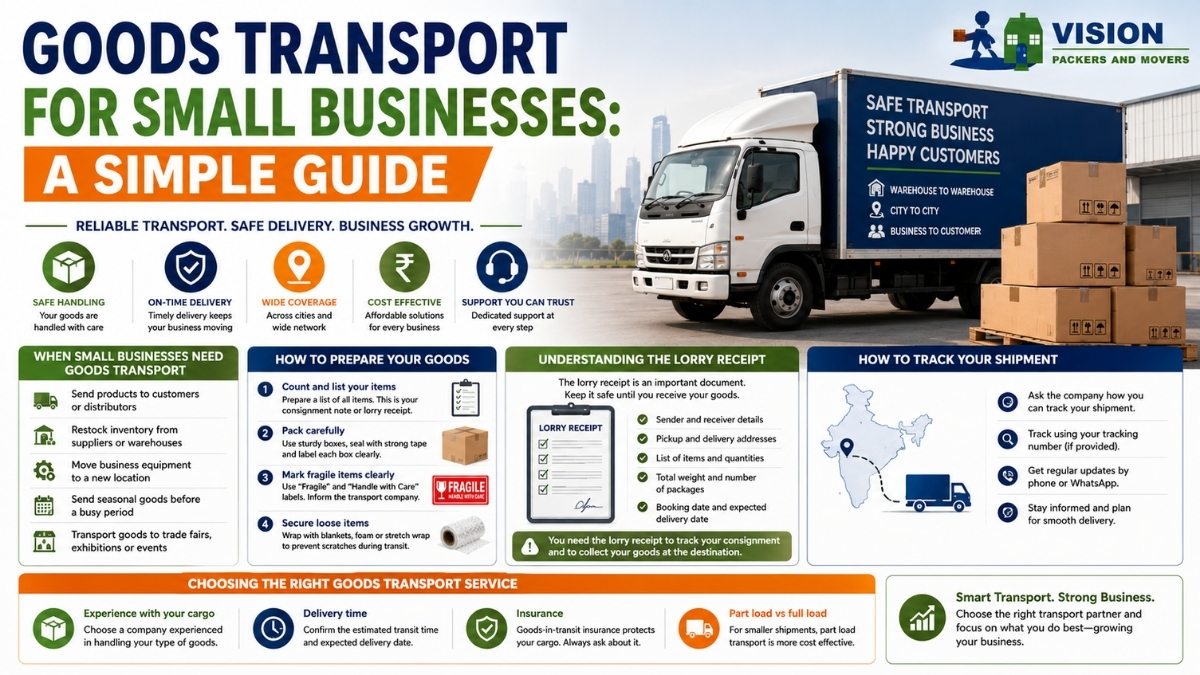
Running a small business often means sending goods from one place to another. Whether you are a shop owner restocking inventory or a small business sending products to customers in another city, goods transport is an important part of keeping your business running. This guide explains how it works and what small business owners need to know.
What Is Goods Transport
Goods transport is the service of moving cargo, products, or materials from one city to another using trucks or commercial vehicles. Unlike house shifting, which moves personal belongings, goods transport focuses on business cargo such as stock, machinery, raw materials, and packaged products.
When Small Businesses Need Goods Transport
Small businesses use goods transport in many situations:
- Sending products to customers or distributors in other cities
- Restocking shop inventory from a supplier or warehouse
- Moving business equipment to a new location
- Sending seasonal goods before a busy period
- Transporting goods to a trade fair, exhibition, or event
How to Prepare Your Goods for Transport
Proper preparation reduces the risk of damage during transit and makes loading and unloading faster.
- Count and list your items: Before the truck arrives, prepare a list of everything you are sending. This document, called a consignment note or lorry receipt, is the official record of what was handed over.
- Pack carefully: Use sturdy cardboard boxes for smaller items. Seal them with strong tape. Label every box with the contents, quantity, and destination address.
- Mark fragile items clearly: If any items are breakable or sensitive, mark the boxes with Fragile and Handle with Care labels. Inform the transport company about these items before loading.
- Secure loose items: Items that are not boxed, such as furniture pieces or machinery parts, should be wrapped in blankets, foam, or stretch wrap to prevent scratches during transit.
Understanding the Lorry Receipt
When you hand over your goods to the transport company, you will receive a lorry receipt. This is a very important document. Keep it safe. The lorry receipt contains:
- The name of the sender and receiver
- The pickup and delivery addresses
- A list of items and their quantities
- The total weight and number of packages
- The booking date and expected delivery date
You will need the lorry receipt to track your consignment and to collect your goods at the other end. Without it, collecting your goods at the destination can be difficult.
How to Track Your Shipment
Most professional transport companies offer basic shipment tracking. When you book, ask the company how you can check on your goods during transit. Some companies provide a tracking number. Others provide regular updates by phone or WhatsApp. Knowing where your goods are gives you peace of mind and helps you plan for delivery at the other end.
Choosing the Right Goods Transport Service
When selecting a transport company for your business goods, consider the following:
- Experience with your type of cargo: Not all transport companies handle all types of goods. If you are sending fragile items or heavy machinery, confirm that the company has experience with that type of cargo.
- Delivery time: Ask about the estimated transit time. For time-sensitive shipments, confirm the expected delivery date in writing.
- Insurance: Goods-in-transit insurance protects the financial value of your cargo. Always ask whether it is included or available as an add-on.
- Part load versus full load: If you are sending a small volume, ask about part load transport, which costs less than booking an entire truck.