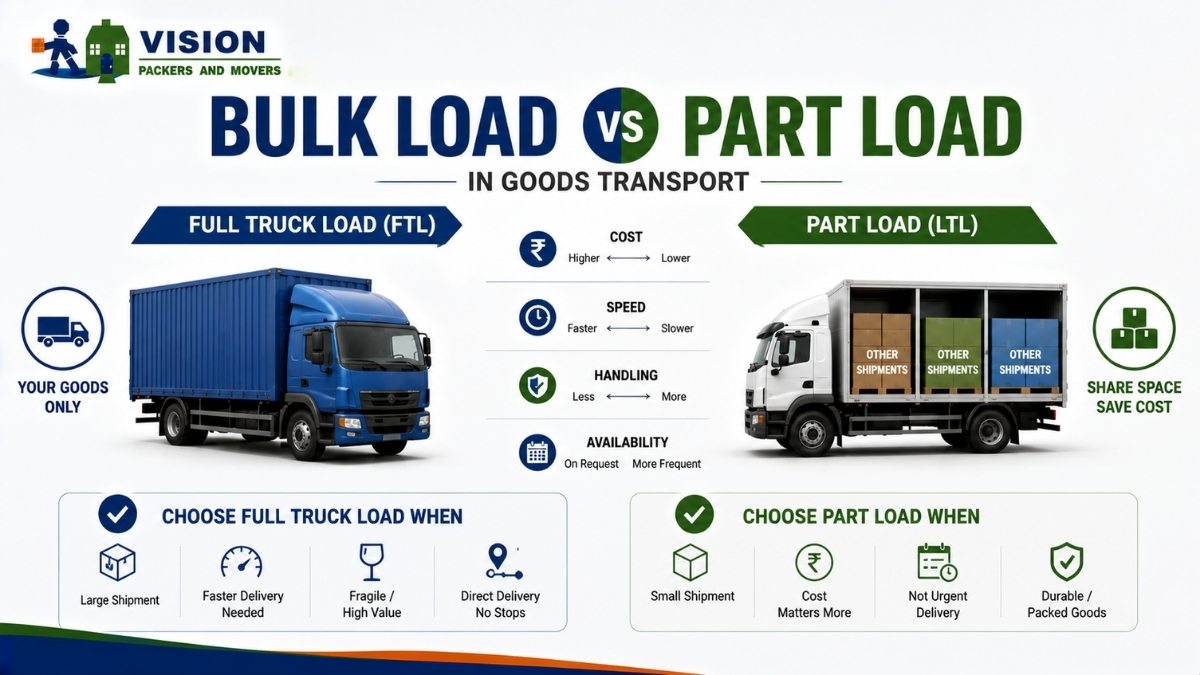
When you contact a goods transport company, one of the first questions they will ask is whether you need a full truck or a part load. If you have never sent goods this way before, these terms can be confusing. This guide explains both options clearly so you can choose the one that fits your shipment size and budget.
What Is a Full Truck Load
A full truck load, sometimes called FTL, means you book the entire truck for your shipment. The truck picks up your goods, drives directly to the delivery destination, and delivers without making any other stops along the way. Your goods are the only cargo in the vehicle from pickup to delivery.
What Is a Part Load
A part load, sometimes called LTL (Less Than Truckload) or groupage, means you book only the space your goods need inside a truck that is shared with goods from other customers. The truck makes multiple pickups and deliveries along the route. You pay only for the portion of the truck your goods occupy, not the entire vehicle.
Key Differences Between the Two
- Cost: Part load is significantly cheaper for small shipments because you share the truck cost with other customers. A full truck is more expensive in total but becomes cost-effective when your goods fill most or all of the space.
- Speed: A full truck delivers faster because it goes directly from pickup to delivery. A part-load truck makes multiple stops, which can add one to three days to the delivery time on most routes.
- Risk of damage: In a full truck, your goods are not handled multiple times. In a part-load truck, goods from different customers are loaded and unloaded at various stops, which means slightly more handling overall.
- Availability: Part-load bookings are available more frequently because vehicles consolidate multiple shipments daily. A full truck booking may require a day or two of lead time to arrange the right vehicle for your load size.
When to Choose Part Load
- Your shipment weighs less than 1,000 to 2,000 kilograms
- You are not in a hurry for delivery
- Cost is more important than speed for this shipment
- You are sending packaged, robust goods that can handle some handling at multiple stops
When to Choose Full Truck Load
- Your goods fill most or all of a standard transport truck
- Speed of delivery is important — such as time-sensitive business stock or event materials
- Your goods are fragile or need minimal handling between pickup and delivery
- You want direct, predictable delivery without intermediate stops
- You are moving a complete set of household goods or office equipment between cities
How to Estimate Which You Need
A standard goods transport vehicle carries between 1,000 and 5,000 kilograms depending on the truck size. If your shipment weighs under 500 kilograms, a part load is almost always the right choice. If your shipment is close to the truck's full capacity, a full truckload booking often works out to a similar price and gives you faster, direct delivery.
When in doubt, share the weight, number of boxes, and dimensions of your shipment with the transport company. They can recommend the right option based on your specific load and route.