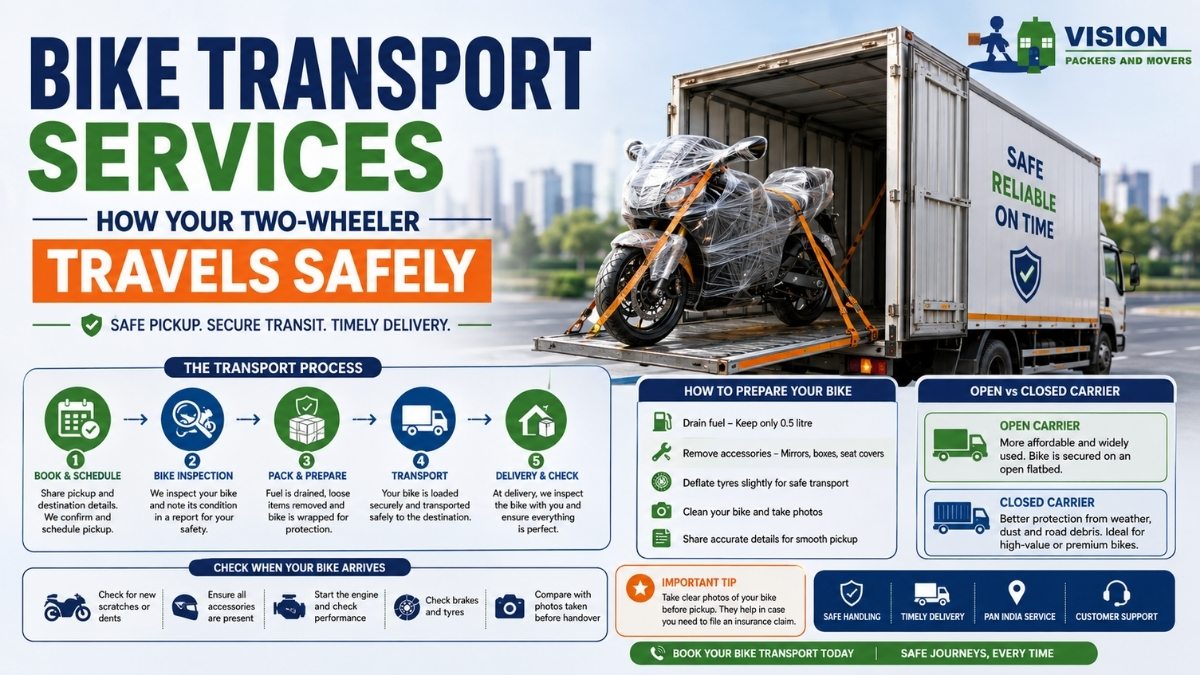
Moving to a new city and wondering how to get your bike there safely? Bike transport is a simple and reliable service that gets your two-wheeler from one city to another without you having to ride it across hundreds of kilometres. Here is everything you need to know about how it works.
How Bike Transport Works
When you book a bike transport service, a team visits your home or a designated pickup point to collect your two-wheeler. The bike is packed, loaded onto a carrier vehicle, and transported to your destination city. At the other end, the bike is delivered to your home or to a local depot where you can collect it.
The entire process is straightforward. The key is knowing how to prepare your bike and what to check when it arrives.
The Steps Involved in Transporting a Bike
- Booking and scheduling: You share your pickup city, destination city, bike model, and preferred dates. The company confirms the booking and provides a pickup date.
- Bike inspection: Before the team takes the bike, they inspect it for existing damage and note it in a condition report. Be present for this step and agree with the report before signing.
- Preparation and packing: The team drains fuel from the tank, removes loose accessories, and wraps the bike in protective material.
- Loading and transport: The bike is loaded onto a carrier vehicle and transported to the destination city.
- Delivery and inspection: At delivery, you inspect the bike again and compare its condition to the original report before signing the delivery receipt.
How to Prepare Your Bike Before Handover
A little preparation on your part helps ensure a smooth transport experience.
- Drain the fuel tank: Remove almost all petrol from the tank before handover. Most transport companies require this for safety reasons. Keep only about half a litre so the bike can be moved short distances at the depot.
- Remove all accessories: Take off any added accessories such as box carriers, handlebar mirrors, seat covers, and phone mounts. Pack them separately or carry them with you.
- Deflate the tyres slightly: Reducing tyre pressure slightly helps absorb vibration during transport. The movers may do this for you, but it is good to know.
- Clean the bike: Cleaning your bike before handover makes it easier to spot any new damage at delivery.
- Take photos: Photograph your bike from all angles before handover. These photos are useful if you need to file a claim for any damage.
Open Carrier Versus Closed Carrier
Bikes are transported in one of two types of vehicles.
Open carrier: The bike is loaded onto an open flatbed truck. This is the more common and more affordable option. The bike is exposed to weather conditions during the journey but is secured properly to prevent movement.
Closed carrier: The bike travels inside a closed truck or container. This offers better protection against rain, dust, and road debris. It costs more than an open carrier but is recommended for high-value or premium bikes.
What to Check When Your Bike Arrives
When the delivery arrives, inspect your bike carefully before signing any documents.
- Check the body for new scratches or dents
- Check that all original accessories are present
- Start the engine to confirm it runs properly
- Check the brakes and tyres
- Compare the current condition of the bike to the photos you took before handover
If you notice any new damage, report it immediately to the delivery team and note it on the delivery receipt before signing. Do not sign the receipt if you are not satisfied.