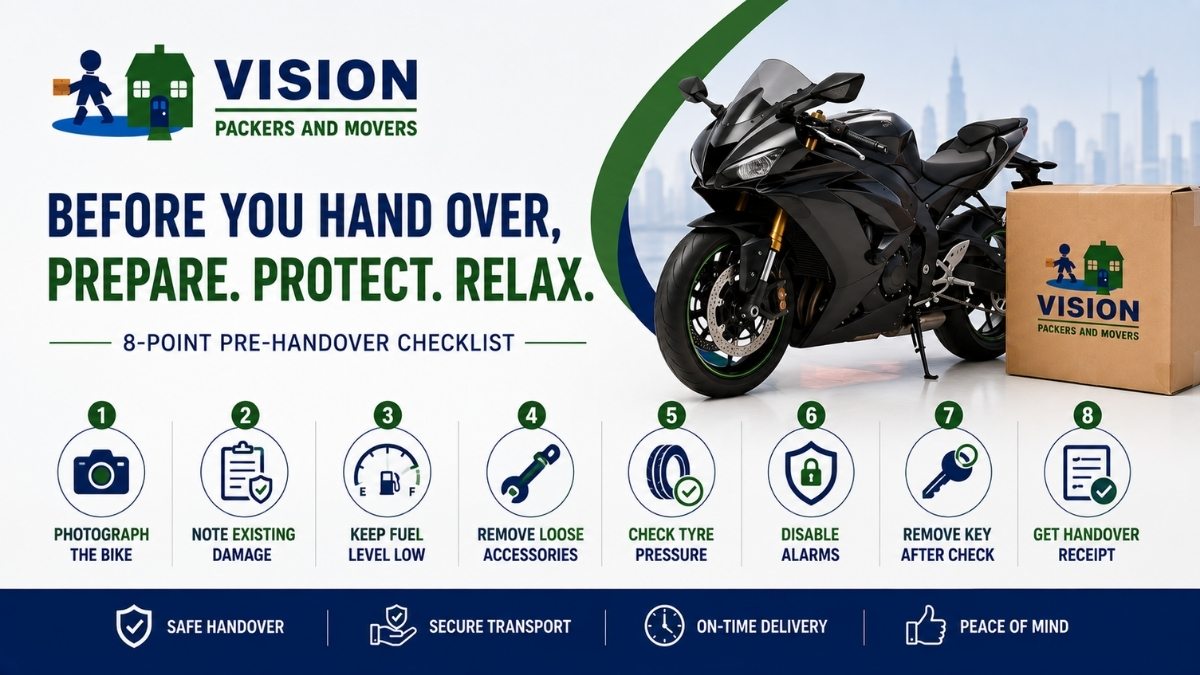
A few simple steps before the transport team arrives can protect the bike, prevent disputes after delivery, and make the handover process much smoother for everyone involved.
Photograph the Bike From Every Angle
Take clear photos of the front, back, both sides, the dashboard area, and any existing scratches or marks before the team arrives. Save the photos with the date and time visible in the file metadata or on the screen. These images serve as evidence of the condition of the bike before handover if any damage is reported or disputed after delivery.
Note Existing Damage Before Handover
Make a written note of any pre-existing scratches, dents, or marks on the bike. Share this written note with the transport team at the time of handover and ask them to record it on the handover document before they formally accept the bike. This step protects you against disputes about whether any damage found at delivery occurred before or during transport.
Keep the Fuel Level Low
Keep the fuel tank at no more than one quarter full before handover. A full tank adds significant weight to the bike and is considered a safety consideration during certain types of road transport. One quarter of a tank is enough to ride the bike comfortably after delivery at the destination without the need to refuel immediately.
Remove Loose Accessories and Personal Items
Detach any removable accessories before the team arrives — phone holders, saddlebags, mirrors that unscrew easily, and any custom attachments or aftermarket fittings. These items are at risk of falling off or being damaged during loading and transit. Take them with you separately rather than leaving them fitted to the bike during the journey.
Check the Tyre Pressure
Ensure both tyres are properly inflated before handover. A flat or under-inflated tyre makes loading the bike onto the carrier more difficult and increases the risk of rim damage during transit. Correct tyre pressure also makes the bike easier for the transport team to push and position during loading at the origin and unloading at the destination.
Disable Any Alarms or Anti-Theft Devices
Transport teams need to push and manoeuvre the bike during loading. An alarm that triggers unexpectedly during this process causes confusion, delays the loading of other items, and can be difficult to disable without the key or code. Disable all alarms and immobilisers before the team arrives at the pickup address.
Remove the Key After Showing the Bike
Let the transport team verify that the bike starts and is in the stated condition before handover, then take the key with you when you leave. The bike does not require the key during transport, and keeping the key in your possession is significantly safer than sending it along with the bike in the carrier.
Get the Handover Receipt in Writing
Before the team leaves the pickup address, confirm that you have received a written receipt listing the bike model, registration number, pickup location, delivery destination, and expected delivery date or window. This receipt is the primary proof of booking and is the document you will need if any follow-up is required before or after delivery.
The entire preparation takes fifteen to twenty minutes at most. Those twenty minutes protect against the majority of disputes and misunderstandings that arise after bike transport has been completed.